
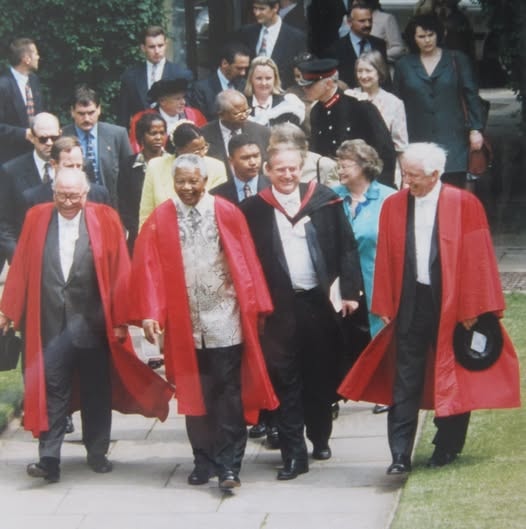
In Partnership with THE JALC-ILO-MANDELA PRISON MINISTRY
The Methodist Law Centre - Prison Ministry
Ecumenical Chaplaincy & Human Rights Advocacy
Our Mission
We exist to bring the light of justice and the hope of the Gospel to those behind bars. Through non-attorney administrative legal assistance, human rights advocacy, spiritual care, and community support, we walk alongside the incarcerated, their families, and those re-entering society.

Tom Tower, Christ Church, Oxford — where John Wesley and the Holy Club began their prison ministry in the 1720s
Faith
Grounded in the Methodist tradition, we believe every person is worthy of dignity, grace, and a second chance.
Human Rights
We advocate for the rights of the incarcerated under the United Nations Nelson Mandela Standards and the International Labour Organization — ensuring every person is treated with dignity under international law.
Advocacy
We speak up for the voiceless — providing non-attorney administrative assistance, navigating correctional systems, and fighting for the human rights of the imprisoned.
The Spirit of the Lord is upon me, because he has anointed me to proclaim good news to the poor… to proclaim freedom for the prisoners.
Luke 4:18
I was in prison and you came to visit me… whatever you did for one of the least of these brothers and sisters of mine, you did for me.
Matthew 25:36, 40
The History of Early Methodist Prison Ministry
1720s England: Where It All Began
Prison ministry was not an optional charity for the early Methodists — it was a core demand of the Christian faith. John Wesley and the early Methodists viewed prison ministry not as a peripheral act of charity, but as an irreducible obligation of the Christian life.
The Seeds of Social Holiness
In the early 1720s, the young John Wesley was already wrestling with the relationship between personal piety and public action. Influenced by the writings of William Law and the example of the early church, Wesley began to understand that genuine faith could not remain confined to private devotion — it must express itself in service to the poor, the sick, and the imprisoned.
The Holy Club Forms
John and Charles Wesley formed a strict religious study group at Oxford University. Mocked by peers as the "Holy Club" or "Methodists" due to their methodical schedules and disciplined approach to scripture, prayer, and fasting, the group initially focused on internal spiritual formation. Their trajectory changed entirely in the summer of 1730.
William Morgan's Decisive Visit
Fellow Holy Club member William Morgan visited the Oxford Castle prison and a local workhouse — and was profoundly moved by what he found. He convinced John and Charles Wesley to join him. That first visit to Oxford Castle marked a turning point: the Methodists had encountered the imprisoned face to face, and they could not look away.
Systematic, Mandatory Visitation
The Methodists quickly turned prison visits into a mandatory weekly routine. They took detailed notes on prisoners' individual spiritual and physical needs. They provided food, medicine, books, and legal assistance to those who could not afford counsel. They held worship services and Bible studies inside the prison walls. What began as local outreach became a defining practice of the Methodist movement.
A Campaign for Systemic Reform
John Wesley ultimately visited hundreds of prisons across Great Britain. His concern evolved from individual spiritual care into a passionate, lifelong campaign for systemic prison reform — advocating for humane conditions, the abolition of debtors' prisons, and the rehabilitation of offenders. Wesley understood that visiting the imprisoned was not charity. It was obedience — a direct command of Matthew 25 and Hebrews 13:3.
The Methodist Law Centre stands in this unbroken tradition. Prison ministry is not a program we run alongside our other work. It is the work — the irreducible expression of a faith that refuses to leave anyone behind.
What We Do
Serving Those in Need
Administrative Legal Assistance
Non-attorney administrative assistance for incarcerated individuals and their families — helping navigate grievance procedures, document preparation, correspondence with correctional facilities, and post-release administrative processes.
Prison Ministry
Regular visits, Bible studies, worship services, and spiritual counseling inside correctional facilities — bringing hope where it is needed most.
Human Rights Advocacy
Advocating for the humane treatment of incarcerated persons under the United Nations Nelson Mandela Rules and ILO standards — addressing grievances, documenting conditions, and supporting successful reentry into society.
Partner With Us
The Methodist Law Centre works alongside the JALC- Mandela Prison Ministry to serve incarcerated individuals and their families. Learn more about our shared mission or get involved today.
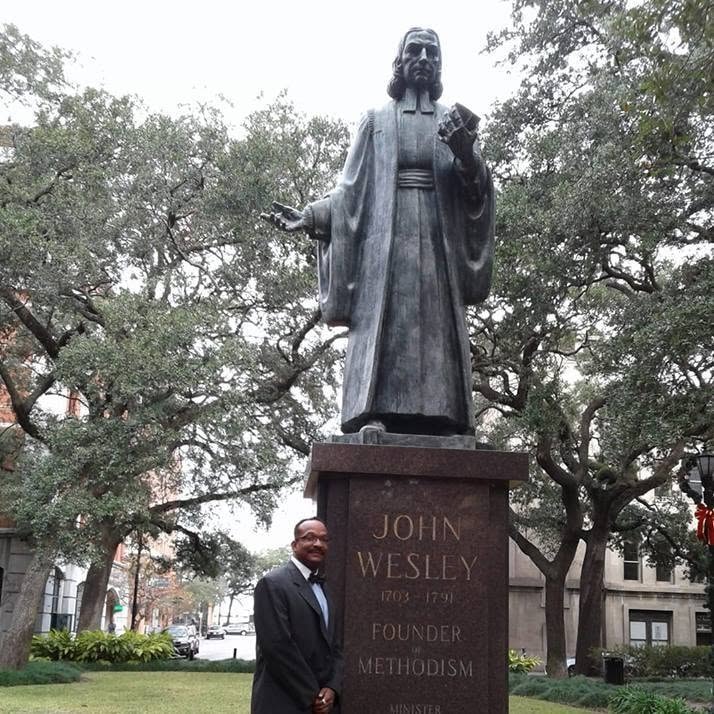
Rev. Roderick Ford standing at the statute of Rev. John Wesley (1703-1791), Co-Founder of Methodism.